


API guide
Fly.io vs Railway vs Render: Deployment API Comparison 2026
Compare Fly.io, Railway, and Render deployment APIs, automation models, region controls, health checks, and usage-based pricing triggers.
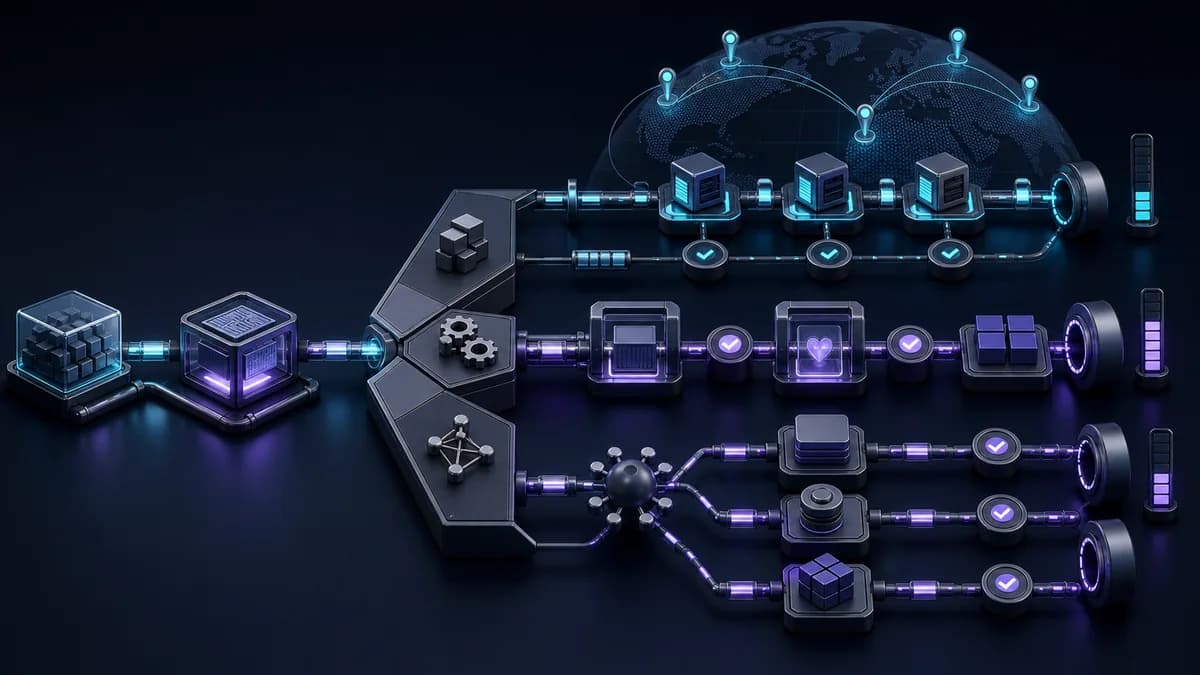
Fly.io vs Railway vs Render: Deployment API Comparison 2026
Fly.io, Railway, and Render can all deploy a containerized web service, but their automation interfaces expose different operating models. Fly.io gives you lower-level machine lifecycle and region-placement control. Railway exposes the same GraphQL API that powers its dashboard, organized around projects, environments, services, and deployments. Render offers a public REST API around explicit service types such as web services, workers, and cron jobs.
The practical choice is not “which platform can run Node or Python?” All three can. It is which deployment abstraction your team wants to automate and own.
TL;DR decision
- Choose Fly.io when your automation needs to create, start, stop, update, or place VM-like Machines directly and regional placement is part of the application design.
- Choose Railway when you want a project-oriented managed workflow and a GraphQL API for CI/CD automation across services, variables, environments, domains, and deployments.
- Choose Render when you prefer a conventional REST API and explicit managed service shapes for web processes, private services, background workers, and scheduled jobs.
None is automatically cheapest. Compare the real mix of running compute, stopped resources, storage, bandwidth, databases, team-plan charges, and preview environments against current pricing pages.
Deployment API decision matrix
| Decision factor | Fly.io | Railway | Render |
|---|---|---|---|
| Primary automation interface | Machines REST API plus flyctl and app configuration | Public GraphQL API used by the Railway dashboard | Public REST API plus dashboard and Git/Docker workflows |
| Main resource model | Apps containing Machines and optional Volumes | Projects containing environments, services, and deployments | Workspaces containing typed services and datastores |
| Best fit | Teams that want lifecycle and placement control close to the VM | Teams that want one API over a managed project/deployment workflow | Teams that want service-type clarity and straightforward REST operations |
| Deployment health | Machine and service configuration are your control surface | Deployment becomes active after container start or a configured health check succeeds | Service deploys expose deploy operations and service-level health behavior |
| Region posture | Region placement is an explicit Machine concern | Region and replica choices live within the managed service model | A service is created in a selected region and shares private networking with same-region services |
| Main tradeoff | More infrastructure decisions remain with the application team | GraphQL and Railway's project model become part of your automation | The service abstraction is easier to operate but less machine-granular than Fly.io |
Fly.io: direct machine lifecycle control
Fly Machines are fast-launching VMs and the compute behind Fly.io applications. The Machines REST API can provision and manage Apps, Machines, and Volumes. A Machine belongs to an App, and the API exposes lifecycle operations such as create, start, stop, update, and delete as well as region placement and resource configuration.
That interface is useful when deployment automation needs to react at the machine level. Examples include placing workers near a data source, starting capacity in response to demand, maintaining separate machine groups for web and background work, or building a custom control plane.
The cost model follows that resource ownership. Fly's pricing documentation distinguishes running and stopped Machines, attached storage, network transfer, and other provisioned resources. Model those separately; “scaled to zero” does not imply every associated resource is free.
Choose Fly.io when
- Your platform code needs direct machine lifecycle operations.
- Region placement is a first-class application requirement.
- Standard container images are important for portability.
- Your team is comfortable owning more networking, storage, and placement decisions.
Railway: one GraphQL surface for the project workflow
Railway's public API is GraphQL and is the same API used by the Railway dashboard. Its documentation exposes operations for projects, services, deployments, variables, environments, domains, and volumes, which makes it a natural fit for CI/CD systems that want to automate the managed Railway workflow rather than individual VMs.
A Railway deployment is an attempt to build and deliver a service. The documented lifecycle moves through initialization, build, deployment, and an active or failed state. When a health check is configured, Railway waits for it to succeed before marking the deployment active; otherwise the running container can become active after it starts.
Railway combines plan pricing with resource usage and included usage credits on some plans. Treat plan fees, resource consumption, storage, networking, and environment count as separate inputs in a proof-of-concept cost model.
Choose Railway when
- You want project, environment, service, and deployment automation through GraphQL.
- A managed build-and-deploy lifecycle is more valuable than VM-level control.
- Preview and environment workflows are central to the team's release process.
- Your proof of concept confirms the region and scaling model fits production traffic.
Render: REST operations over explicit service types
Render's public REST API provides programmatic access to most capabilities available in its dashboard. The API includes service, deploy, environment-group, instance, and scaling operations. A web service can deploy from a linked Git repository or a prebuilt Docker image, while Render's broader service model also covers private services, background workers, and cron jobs.
This is a useful abstraction for teams that want the deployment topology to read like the process model: one web service, one worker, one scheduled task, and supporting datastores. Services in the same region can communicate over Render's private network, so region selection should be evaluated across the whole service graph rather than one process at a time.
Render documents three broad pricing inputs: workspace plan, metered features such as bandwidth, and per-service compute. Compute billing is prorated, but attached datastores, network usage, and plan features can still be material.
Choose Render when
- Your automation prefers REST resources and explicit service types.
- Web, worker, private-service, and cron responsibilities should remain visibly separate.
- Git or Docker deployment with managed service operations matches the team's release model.
- Same-region private networking is sufficient for the intended topology.
Pricing triggers to model before choosing
Avoid a single “monthly app” estimate. Build the same small production topology on each platform and track:
- Always-on and burst compute. Include minimum replicas, worker processes, and any capacity that cannot scale down.
- Stopped or idle resources. Check whether stopped compute, persistent disks, reserved capacity, or dormant databases still bill.
- Network transfer. Separate public egress from same-region and cross-region traffic.
- Persistent data. Price application volumes, backups, managed databases, and replicas independently.
- Release environments. Include staging, pull-request previews, build minutes, and duplicated services.
- Team and governance features. Add workspace seats, roles, SSO, audit requirements, and support only when the team needs them.
Run one deployment-API proof of concept
Use one representative service with a health endpoint, background task, persistent dependency, and rollback requirement. Then test the same workflow on all three platforms:
- create an isolated environment through the API;
- deploy a pinned Git revision or container image;
- inject configuration without logging secrets;
- wait for a health signal and capture deployment status;
- scale the web process and background worker independently;
- roll back a failed release;
- export enough configuration to rebuild the environment;
- estimate cost from measured resources rather than headline plan names.
The best fit is the platform whose API makes that workflow clear and maintainable for your team.
Verdict
Pick Fly.io for machine-level lifecycle and placement control, Railway for GraphQL automation around a managed project workflow, or Render for REST automation around explicit service types. If two options remain close, favor the one whose deployment status, rollback path, region model, and cost inputs your on-call team can explain without opening a vendor dashboard.
Evidence ledger
| Source | Last checked | Why it matters |
|---|---|---|
| Fly Machines overview | 2026-07-23 | Machine model, lifecycle, and region-placement control |
| Fly Machines API | 2026-07-23 | REST resources for Apps, Machines, and Volumes |
| Fly.io resource pricing | 2026-07-23 | Running, stopped, storage, and network billing triggers |
| Railway public API | 2026-07-23 | GraphQL interface and automation scope |
| Railway deployments | 2026-07-23 | Build, deploy, health-check, and status lifecycle |
| Railway pricing | 2026-07-23 | Plans, included usage, and resource-usage posture |
| Render public API | 2026-07-23 | REST service and deploy operations |
| Render web services | 2026-07-23 | Git/Docker deployment, regions, and private networking |
| Render pricing | 2026-07-23 | Workspace, metered feature, and compute billing triggers |
Related APIScout guides
The API Integration Checklist (Free PDF)
Step-by-step checklist: auth setup, rate limit handling, error codes, SDK evaluation, and pricing comparison for 50+ APIs. Used by 200+ developers.
Join 200+ developers. Unsubscribe in one click.